
Healthcare SEO Essentials to Implement Before the End of 2024

Angela Myers
If your healthcare organization or business has a website, you’ve most likely heard of search engine optimization (SEO). But knowing that SEO exists and effectively implementing the best healthcare SEO practices are two different things. The latter ensures more website visitors, higher search rankings, and growth for your business.
And as a healthcare writer and SEO strategist, I want to help you achieve the latter. To do so, I reflected on the most effective SEO practices in 2024 and interviewed other leading SEO experts on the same topic.
What is healthcare SEO?
Before we skyrocket your search rankings, let’s discuss what SEO is. SEO is an acronym for search engine optimization. It’s a series of practices that helps improve how your website ranks for keywords related to your industry (most likely healthcare if you’re reading this piece).
SEO applies to blogs, landing pages, pillar pages, and all other web content that you publish. It even relates to your social media content, but social media SEO is a topic for another time. What we’re focusing on today is how to get your website to rank higher in relevant searches.
Follow tried and true SEO basics
Over the past three (almost four) years, I’ve written top ranking content for companies (and provided updates that helped older content rank higher in search). After one updates project, my client saw daily traffic increase by 32.5% while new blogs for a health tech company have resulted in them regularly showing up in relevant searches.
These SEO wins are the result of some tried and true healthcare SEO basics that worked when I started my business and work now:
- Target the right keywords for your site authority, industry, and ideal website visitors
- Audit your website and regularly update content
- Provide value and answer your ideal readers’ questions
- Develop a site structure
- Have an internal and external linking strategy
- Make sure your sitemap is in the Google Search Console
Along with these basics, there are some additional SEO practices that other experts and I are recognizing as crucial to ranking in 2024.
Essential 1: Showcase your authority
“Health and fitness consumers are looking for authoritative information about practices and services that get results,” says Trisha Turner, a freelance writer and editor. She adds that Google uses its E-E-A-T principles (Experience, Expertise, Authoritativeness and Trustworthiness) to determine information’s authority.
“By focusing on information from credentialed experts who provide useful insight about health and fitness actions and the outcomes they achieve, you can deliver for both prospective customers and SEO metrics,” says Turner.
Another interesting way to meet Google’s E-E-A-T principles is to hire freelance writers with reputable bylines in your space. When ranking articles and blogs, Google pays attention to bylines and prefers writers who have written for well-established media outlets or healthcare news sources, such as Forbes, AARP, or even one of your competitors who has good site authority.
A great strategy to get the E-E-A-T of an experienced health writer AND your medical experts is to hire that writer with impressive bylines and have them interview in-house medical experts.
Depending on your organization’s brand voice and content strategy, they could also interview external experts and send the published blog to those experts. If external experts share, that’s new eyeballs on your content.
Essential 2: Optimize for Google overviews and people also ask
In the days of yore, Google searches would bring up about nine websites on page one. Readers would choose which they’d like to read based on the displayed title and meta description. The results for most searches in 2024 look a little different.
If, for example, I google “Medicare Give Back Benefit” this is what pops up:
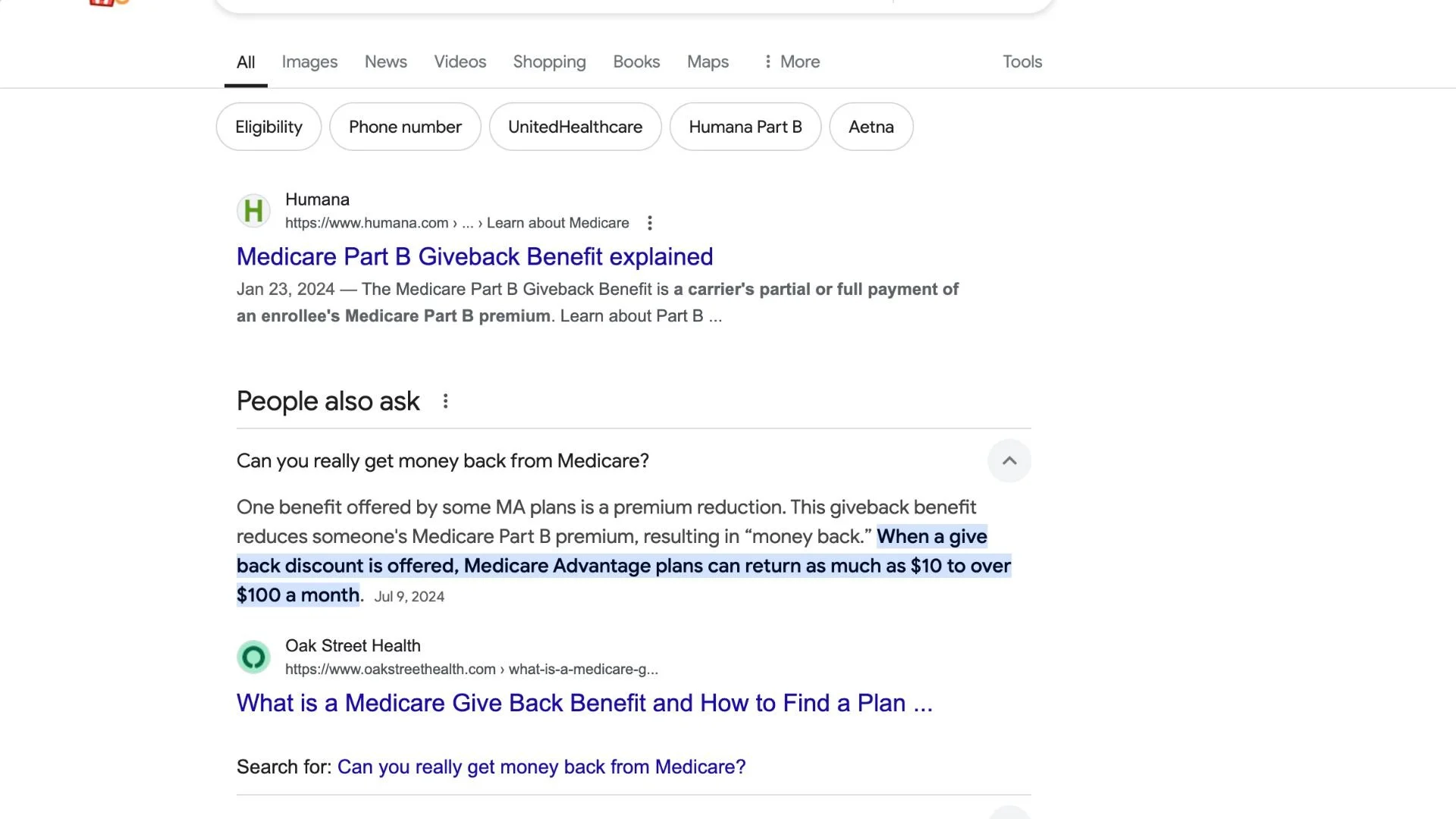
As you can see, there’s one “traditional” title and meta-description ranking and then a “people also ask” section (with an answer from an article I wrote for the first question).
For other searches, Google even puts a lengthy snippet or a list from multiple resources first, as demonstrated in the results for “healthy living tips,” or an AI overview, such as this one for Graces’ disease.
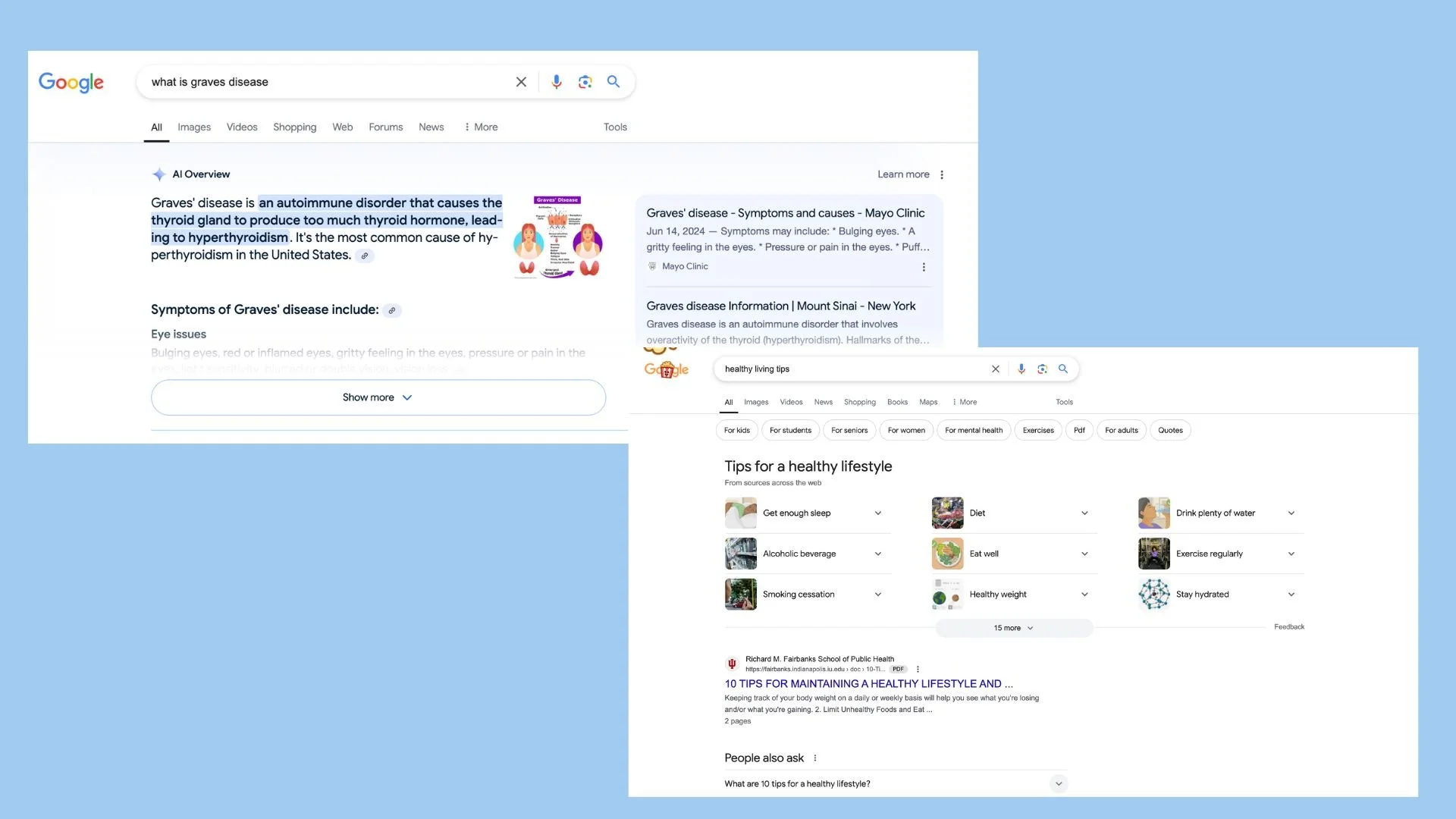
If you don’t optimize for these new display types, you are missing traffic. Plus, optimizing for these search displays is easy and provides a blog structure beneficial to readers as well. The first step is to ensure you have “standalone snippets” that Google could pull from, such as a list of healthcare SEO essentials.
The second step is to add a frequently asked questions section to the bottom of your article. Answer a few questions in the “People Also Ask” section for your target keyword(s)—and answer them more thoroughly than the current answer.
Essential 3: Remember technical SEO
“One technical SEO tip that is often overlooked is optimizing your website's page speed,” says Daniel Horvath, founder of Hood West Design, “Fast-loading pages improve your user's experience and also positively impact your search rankings.”
Horvath reflects that many companies fail to check (and improve) their site speed. A slow site speed leads to a higher bounce rate and lower conversions, neither of which is a value-add for your SEO strategy or business.
But optimizing for site speed can seem a bit abstract to those of us who aren’t tech savvy. Horvath provides a few practical tips to improve site speed:
- Compress images for your website
- Minify your CSS and Javascript files
- Leverage browser caching and a Content Delivery Network (CDN)
The latter ensures your site loading speed is quick, no matter a visitor's geographical location. “Optimizing for page speed will enhance your website's performance in search rankings and user engagement,” Horvath concludes.
Essential 4: Ensure graphics work for SEO
When we talk about SEO, we usually think of keywords, optimizing written content, and improving website usability. While all of these aspects matter, we should remember the age old advice that a picture is worth a thousand words.
For Megan Wonderly, a freelance graphic designer, optimizing images for mobile is a top SEO concern. "Your graphics should be dynamic and readable on both desktop and mobile formats,” Wonderly advises, “You should be consistent with your graphic sizing and aim to make your graphics more vertical rather than horizontal.” She adds that this attention to mobile and desktop will make graphics accessible to all readers.
Adding original graphics and images (i.e. not stock photos or AI-generated images) may also help with SEO rankings.