
6 Health Writing Rules to Follow (And a Few to Ignore)

Angela Myers
Writing is a creative field, but that doesn’t mean it’s a free-for-all. There are many rules (grammatical and otherwise) that ensure you and your readers are on the same page. These rules become even more important in healthcare, since health is a nuanced topic that impacts everyone.
To help us all better navigate healthcare communication, I reflected on health writing rules to follow and ignore—and asked other health content experts for their insights.
Rules to Follow
Break down (most) medical concepts
One rule that’s uber specific to health content marketing is to break down most medical concepts. This is audience-dependent, but for the most part, it’s safe to assume not all readers know what GERD stands for, much less what this medical condition is.
A good rule of thumb is my self-coined comma rule. When first introducing a medical concept, add a comma, a description of the concept, and another comma. In practice, this may look like: “Gastroesophageal reflux disease (GERD), a common gastrointestinal condition characterized by chronic acid reflux, is experienced by…”
What you put within the commas varies based on a concept’s complexity, the concept’s importance to the overall piece, and your target audience’s knowledge. But this general rule is a good way to make sure you and your readers are on the same page.
Write with Empathy
Writing about healthcare can seem clinical, almost procedural at times. But that doesn’t mean it should sound that way. Kayla Plettenbrg, a conversion copywriter for health tech brands recommends writing with empathy.
“Health is a sensitive topic, so it’s important to consider the state of mind your reader may be in,” Plettenberg explains, “They could have just gotten an upsetting diagnosis or are feeling desperate in their search for a solution. Put yourself in their shoes.”
One of Plettenberg’s top tips to do so is to write with a conversational tone. She also writes with the intention of making the reader feel comforted and empowered.
Check your Sourcing
Sources matter, regardless of the industry, but they are extra important in the medical space. In the age of health disinformation, health writers and editors should be a source of truth—and should follow best sourcing practices.
To ensure you’re using the best sources, Jessica DiGiacinto, the head of content at MedShadow Foundation, recommends following the trail to the original source. She explains, “Don't settle for an article on a third party site (like Mayo Clinic or even Harvard Health). Go all the way to the original study. Articles on these sites routinely make decisions on what to include from a study, and their inclusions or exclusions may not always capture all the minutiae of a study. And sometimes, minutia is where the story is.”
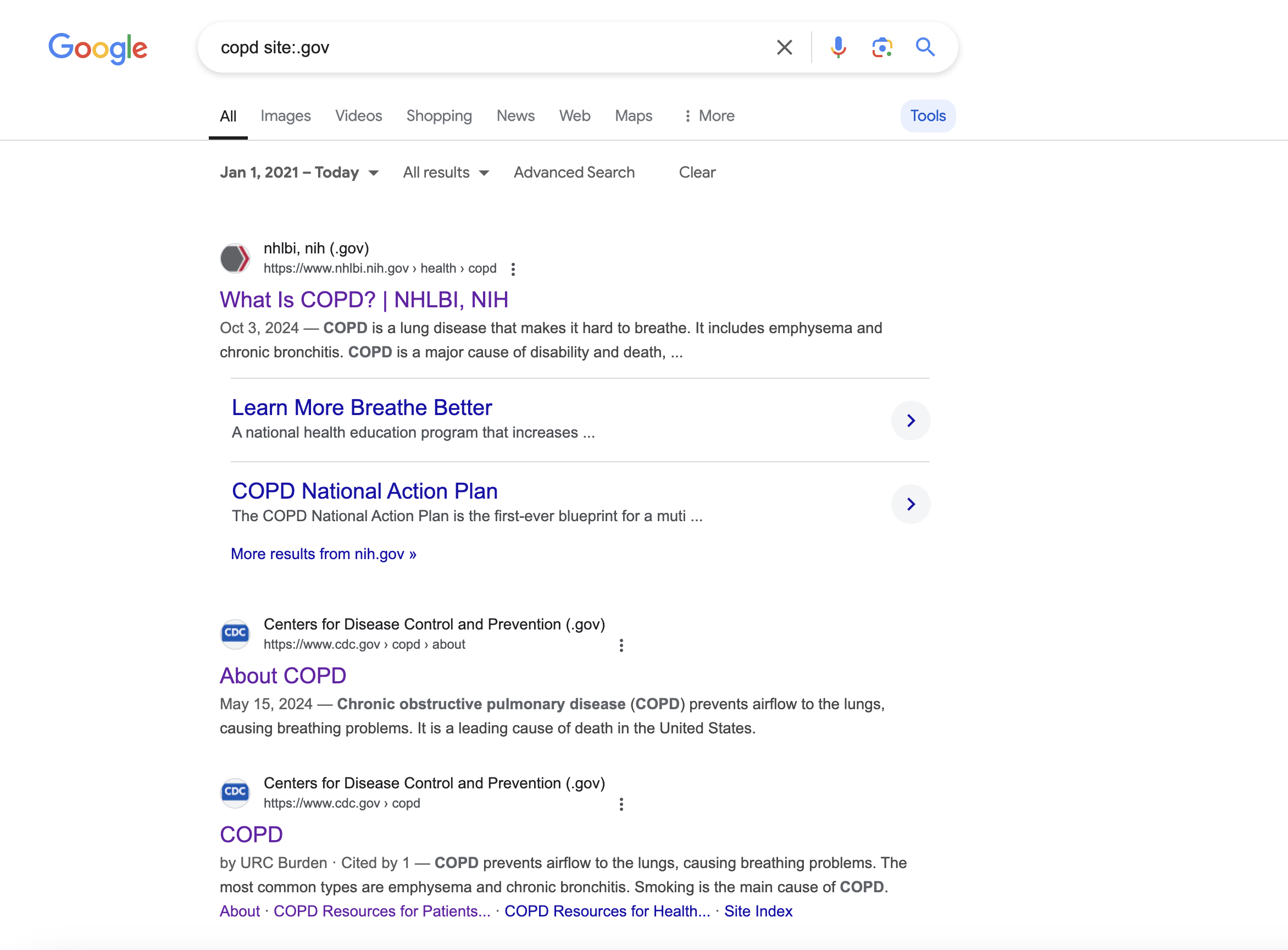
The original source is often a peer reviewed article in a medical journal (though there are exceptions). While Google Scholar is often touted as the best way to find these sources, many of Google Scholar’s results are paywalled. For more accessible, but still valid sources, I do a Google search for the keyword or the researchers’ names associated with a specific medical finding plus the “site:.gov” filter.
Fact-check Subject Matter Experts
Health writing should include a good mix of sources, including interviews with subject matter experts. When interviewing medical experts, it can be tempting to take their word at face value. Even still, it’s our job as health writers to fact check claims made by experts.
Jennifer Chesak, a freelance health writer and editor, explains, “I always fact-check quotes from the expert sources I've interviewed. Sometimes medical experts accidentally get things wrong, share outdated information that hasn't kept up with the latest research, misstate a statistic or number, or include their own biases about a topic.”
Stick to plain language
An age-old writing rule is to use as few words as possible. This is a skill I still (candidly) struggle with on occasion, but it’s important when covering sensitive subjects, including healthcare.
“In the interest of trying to sound different or use flowery language, we often end up in a place where we use words that are offensive or harmful,” explains Britt Julious, a health writer, editor, and content strategist, “Often, the simplest or most straightforward way of something is the best. And that simple language can be the most helpful for the average person reading the writing.”
Remember your audience
This rule was weaved throughout the above tips, but it deserves its own section: remember your audience. Every writing decision you make, from the way you organize content to the language you use, should be influenced by who your audience is, their existing knowledge of a specific healthcare topic, and their current pain points.
And if you think your audience is everyone, think again. The healthcare space is competitive. Writing an article on mental health with a target audience of everyone is less likely to land than one about work-related anxiety for GenZ women.
Remember: when you speak to everyone, you speak to no one.
Rules to Ignore
Write at a fifth grade reading level
Sometimes, it makes sense to follow this rule. However, if physicians are your audience and you’re explaining a new medical finding, you probably won’t (and shouldn’t) write at a fifth grade level.
Plus, a few well-placed “SAT vocabulary words” can behoove the text and keep readers’ attention.
Don’t be controversial
In health writing, we often want to be objective. We don’t want to “rock the boat” or say anything that’s too bold or controversial. Unfortunately, health is more controversial today than ever before. Even a nominal health PSA saying, “Remember to get vaccinated,” could be offensive to some people.
Instead of walking on eggshells, clarify your values and perspective—and don’t be afraid to sprinkle your beliefs into your health and wellness marketing.
Never use the Oxford comma
The Oxford comma isn’t a no-go all the time. Yes, this one is highly personal, but I use the Oxford comma whenever I can.For journalists, it’s a cardinal sin. As someone with an English background, it’s necessary for clarity.
If unfamiliar, the Oxford comma is placed in a list of items between one item and the and/or/other conjunctions to clarify. Newspapers only dropped it in the 20th century to save money on ink.
While I am a personal fan of the Oxford comma, I follow the style guide of whatever client I’m working for—but you can best believe it’s always in my personal writing, and it does make writing easier to understand.
Final thoughts
If the Oxford comma example demonstrates anything, it’s that language is highly subjective. While there are health rules to follow, they don’t apply to every scenario. Instead, you have to consider the nuances of what you’re writing, including a media outlet or business’ style guide, the target audience, the business’ stance on a specific health issue, and more.
If anything, reflecting on writing rules and when to follow and ignore them is another reminder that health writers do more than “just putting words on page.” Health writers must think critically about a topic, readers, and the conversation they’re a part of.
A beginner’s guide to search engine optimization for healthcare
Google has 4.6 billion worldwide users, according to recent research conducted by SEMRush. While that may seem like a huge population, there are also 6 million new blog posts published each day.
Developing a Healthcare Content Marketing Strategy that Works
Many healthcare companies understand content marketing’s potential: more leads, opportunities to educate and empower patients, and business growth.